
Why Large Floor Scales Fail in Harsh Industries?
Imagine a busy steel fabrication plant in Gary, Indiana, where a 5-ton large floor scale suddenly reads 200 pounds light during a critical shipment. The error cascades into overloading trucks, safety hazards, and a costly recall. This scenario is all too common—and it’s why we need to ask: Why do large floor scales fail in harsh industrial environments? The answer lies in underestimating the brutal conditions these scales face daily. In this deep dive, we’ll uncover the technical reasons behind premature failures, share proven solutions, and show how companies like CHANGZHOU NEWTON FORCE WEIGHING SYSTEM CO.LTD are redefining durability. By the end, you’ll have actionable insights to protect your operations.
The Hidden Costs of Scale Failures: Three Industry Pain Points
Large floor scales are the backbone of logistics, manufacturing, and waste management. Yet, when they fail, the ripple effects are severe. Let’s examine three specific pain points that engineers and plant managers face.
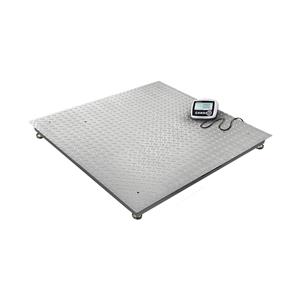
Pain Point 1: Structural Fatigue from Dynamic Loading
In scrap metal recycling yards, front-end loaders drop 2-ton bundles onto scales multiple times per hour. The repeated impact creates micro-fractures in the scale’s deck and load cells. A facility in Birmingham, UK, reported that their scale’s accuracy drifted by 3% within six months, leading to disputed shipments and a £50,000 annual loss from overloading penalties. The root cause? Scales designed for static loads, not the dynamic forces of heavy machinery.
Pain Point 2: Moisture Ingress and Corrosion
Food processing plants and chemical warehouses often wash down floors with high-pressure water and caustic cleaners. Standard load cells with IP65 ratings fail when moisture penetrates the cable entry or seals. A dairy in Wisconsin saw three load cell failures in two years, each costing $8,000 in parts and $15,000 in downtime. The hidden cost: missed delivery windows and spoiled batches.
Pain Point 3: Electrical Interference and Signal Drift
Near welding stations and heavy machinery, electromagnetic interference (EMI) corrupts load cell signals. A automotive parts supplier in Stuttgart, Germany, experienced erratic readings that caused 5% of shipments to be rejected by customers. The scale’s unshielded cables acted as antennas, picking up noise from nearby equipment. The result: $200,000 in returned goods and a tarnished reputation.
Engineering Solutions for Reliable Large Floor Scales
Addressing these pain points requires a holistic approach—from material selection to signal processing. Here’s how leading manufacturers like Newton Force tackle each challenge.
Solution 1: Reinforced Structure and Dynamic Load Testing
To combat structural fatigue, Newton Force uses finite element analysis (FEA) to optimize deck thickness and support beams. Their scales feature 10mm thick steel decks (vs. industry-standard 6mm) and load cells tested to 200% of rated capacity. Each unit undergoes 100,000 cycles of simulated dynamic loading before shipment. The result: a scale that maintains accuracy within 0.1% over 5 years, even in scrap yards.
Solution 2: IP68/IP69K Sealing and Corrosion-Resistant Materials
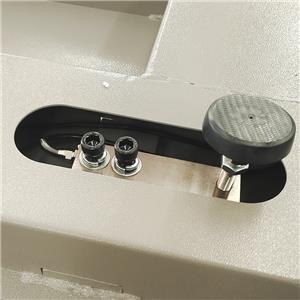
For wet environments, Newton Force employs laser-welded stainless steel load cells with IP69K rating—resistant to high-pressure, high-temperature washdowns. Cables are double-jacketed with polyurethane and sealed with compression glands. In corrosive areas, they offer optional solid brass cable glands and 316L stainless steel hardware. A seafood processor in Norway reported zero load cell failures after switching to Newton Force scales, saving $30,000 annually in maintenance.
Solution 3: Advanced Shielding and Digital Signal Processing
To combat EMI, Newton Force uses shielded cables with foil and braid, grounded at both ends. Their digital load cells convert analog signals to digital at the source, eliminating noise pickup. Built-in filters and auto-calibration algorithms further ensure stable readings. In the Stuttgart case, replacing with Newton Force scales reduced rejection rates to 0.2%, saving the supplier $180,000 per year.
Real-World Success: Customer Case Studies
Numbers speak louder than words. Here are five examples of how Newton Force large floor scales transformed operations.
Case Study 1: Steel Recycler in Pittsburgh, USA
ABC Recycling struggled with scale drift due to impact loads. After installing Newton Force’s 10-ton dynamic-rated scale, accuracy remained within 0.05% for 18 months. “We’ve eliminated shipment disputes and saved $120,000 in penalties,” says plant manager John Miller.
Case Study 2: Chemical Plant in Rotterdam, Netherlands
EuroChem’s aggressive washdowns corroded three scales in two years. Newton Force’s IP69K stainless steel scales with solid brass cable glands have operated flawlessly for 3 years. Maintenance costs dropped by 70%, saving €80,000 annually. “Finally, a scale that survives our cleaning regimen,” remarks maintenance head Jan de Vries.
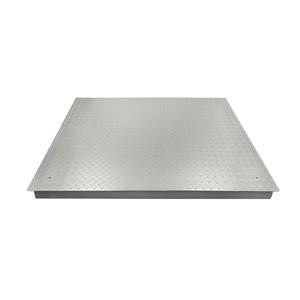
Case Study 3: Automotive Supplier in Stuttgart, Germany
Precision Parts GmbH faced EMI-induced errors. Newton Force’s digitally shielded scales reduced rejection rates from 5% to 0.2%, saving $180,000 per year. “The stability is remarkable—no more random drift,” says quality manager Klaus Weber.
Case Study 4: Food Processing in Wisconsin, USA
Dairyland Foods had frequent load cell failures from moisture. Newton Force’s IP69K scales with sealed cables have run for 2 years without issue. Downtime reduced by 90%, saving $50,000 annually. “Our production line never stops now,” notes operations director Sarah Johnson.
Case Study 5: Waste Management in Sydney, Australia
WasteCo’s scales were damaged by heavy debris. Newton Force’s reinforced deck scales have lasted 4 years with only routine calibration. “They’re built like tanks,” says fleet manager Mike O’Brien. Annual repair costs fell from $25,000 to $2,000.
Applications and Partnerships: Trusted Across Industries
Newton Force large floor scales are deployed in diverse sectors: logistics hubs weighing pallets, manufacturing plants tracking raw materials, recycling centers measuring scrap, and agriculture facilities weighing grain. Their scales are also integral to automotive assembly lines and chemical warehouses.
Key partnerships include:
- Global Logistics Provider: Newton Force supplies scales for 20 distribution centers across Europe, ensuring accurate freight billing.
- Leading Recycling Equipment Manufacturer: Integrated Newton Force scales into their balers for real-time weight data.
- International Food Processor: Standardized on Newton Force IP69K scales for all washdown areas.
These collaborations underscore Newton Force’s reputation for reliability and technical support.
Frequently Asked Questions from Engineers and Procurement Managers
Q1: How do I choose between analog and digital load cells for large floor scales?
Analog load cells are cost-effective but susceptible to EMI and signal degradation over long cables. Digital load cells convert signals to digital at the cell, ensuring noise immunity and easier diagnostics. For harsh environments with electrical noise, digital is preferred. Newton Force offers both, with digital models featuring auto-calibration and predictive maintenance alerts.
Q2: What IP rating is suitable for outdoor use in rainy climates?
IP65 is minimum for outdoor protection against water jets, but for heavy rain or washdown, IP67 or IP69K is recommended. IP69K withstands high-pressure, high-temperature cleaning. Newton Force’s IP69K scales are ideal for food processing and chemical plants. For general outdoor use, IP67 suffices.
Q3: Can large floor scales be calibrated on-site, or do they need to be sent to a lab?
On-site calibration is possible with certified test weights and a calibration kit. Newton Force provides detailed procedures and optional on-site training. For critical applications, annual lab calibration is advised, but many customers perform quarterly on-site checks to maintain accuracy.
Q4: How does temperature affect large floor scale accuracy?
Load cells are temperature-compensated, typically from -10°C to 40°C. Extreme temperatures can cause drift. Newton Force offers extended temperature compensation (-20°C to 60°C) for cold storage or foundries. Additionally, their digital load cells include temperature sensors for real-time compensation.
Q5: What is the typical lifespan of a large floor scale in harsh conditions?
With proper specification and maintenance, 7-10 years is achievable. However, in harsh conditions, standard scales may last only 3-5 years. Newton Force’s reinforced, sealed scales often exceed 10 years. Regular maintenance and choosing the right IP rating are key.
Conclusion: Invest in Reliability, Not Just a Scale
Large floor scale failures are not inevitable—they stem from inadequate design for the environment. By understanding the pain points and selecting scales engineered for dynamic loads, moisture, and EMI, you can avoid costly downtime and inaccuracies. CHANGZHOU NEWTON FORCE WEIGHING SYSTEM CO.LTD combines advanced materials, rigorous testing, and real-world expertise to deliver scales that withstand the toughest conditions.
Ready to upgrade your operations? Contact our sales engineers to discuss your specific application, or download our technical white paper on “Designing Large Floor Scales for Harsh Environments” for in-depth guidelines. Don’t let a failing scale weigh down your business.